Most business owners running Google Ads have no idea how Google's forwarding numbers actually work. Not because they're careless, but because nobody explains it, and the way it works is stranger than anyone assumes.
When your ads use Google's free call reporting, the number a customer sees and dials isn't your number. It's a forwarding number Google assigns from a shared pool, and it routes to your real line. That's how Google counts calls from ads. Free, built in, and fine as far as it goes.
Here's the part nobody reads the fine print on.
The 60-Day Clock
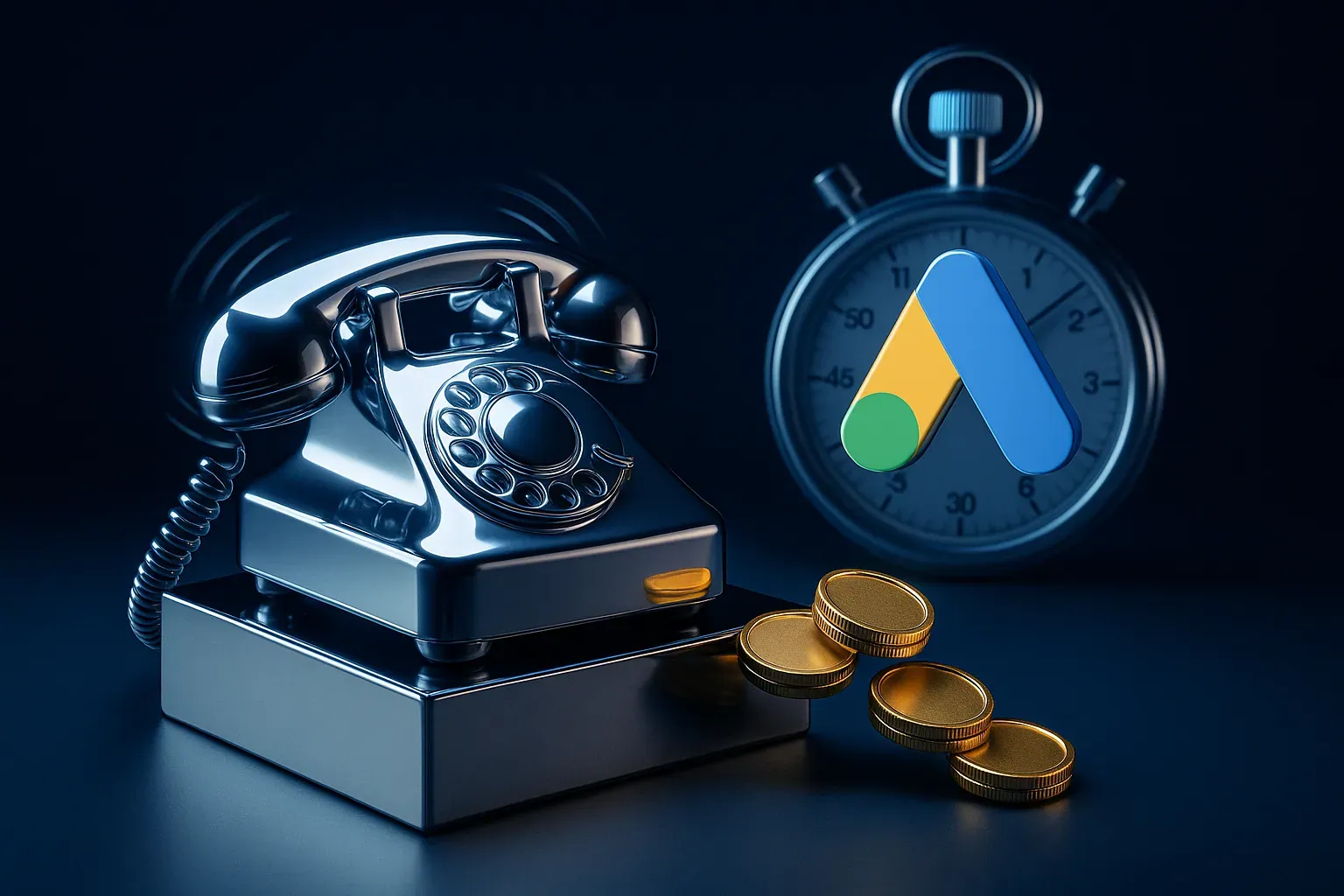
When a customer calls your forwarding number from an ad, Google keeps that number connected to your business for 60 days for that caller. If the same person calls again on day 45, the clock resets and they get another 60 days. But if a full 60 days pass without a call from that specific person, the connection breaks.
And the number doesn't just go dead. It goes back into Google's shared pool, where it gets assigned to a completely different company running ads. Someone who dials it on day 61 reaches whoever holds it now.
Google documents all of this. It's just that nobody who's busy running a business has any reason to go looking for it, right up until the day it costs them.
What That Means in Practice
Think about what customers actually do with a number that called them back or a number they dialed for service. They save it. "Furnace guy." "Plumber, the good one."
A homeowner gets a furnace tune-up in October and saves the number, your number, as far as they know. The furnace dies in February. That's 120 days later. They call the saved contact, and a different business answers. You paid to acquire that customer, you did good work, you earned the callback, and the callback went to someone else's phone.
This isn't only a problem for repeat business. Even a company that sells to each customer once lives on referrals, and referrals travel by saved number. "Call the guys we used, here's their number." The neighbor dials it. The brother-in-law dials it. On day 61, that number belongs to another business, and every referral through it walks straight to whoever holds it now.
You'll never see this happen, by the way. There's no report for it. No missed call shows up anywhere. The customer thinks you changed your number or went out of business, the referral thinks they called you, and you just quietly stop hearing from people who tried to come back.
What Dedicated Call Tracking Changes
Dedicated call tracking numbers are provisioned for your business and they stay yours. They don't expire, they don't rotate, and they don't get handed to a competitor when a quiet 60 days goes by.
And there's a blind spot nobody mentions: Google's forwarding numbers only track calls that come from your ads. That's all they were built to do. The customer who found you on Maps, the one who clicked through from organic search, the one who saw your truck and typed the website in, none of those calls get measured at all. For most local businesses, ads are one slice of the calls coming in, which means the free tracking watches one slice of the phone and leaves the rest dark. You end up with a report that says ads drove 40 calls this month and total silence on where the other calls came from, or whether they even happened.
Dedicated tracking covers every source. Ads, organic search, your Google Business Profile, the website, even the yard signs and door hangers if you give each its own number. Every call maps to the ad, keyword, or page that made the phone ring, which is what dynamic number insertion is for. Calls get logged, recorded where legal, and tied to what actually matters, which is booked revenue, not just call volume. No attribution setup is perfect, ours included, and anyone who claims they can tie every dollar back to a click is selling something. But there's a wide gap between imperfect attribution on numbers you own and no attribution on numbers you're borrowing.
To be fair to Google's forwarding numbers: they're free, and for what they were designed to do, counting calls from ads in the short term, they work. The problem isn't the tool. The problem is that the number on your ads is the number your customers think is yours, and it's a rental with a 60-day meter running per caller.
Your phone number is how your customers and their referrals come back to you. That's not a place to rent.
AdStack™ provisions dedicated tracking numbers as part of every PPC engagement, so the number on your ads is one you keep. If your campaigns are still running on Google's forwarding numbers, book a call and we will show you what the rest of your phone has been doing.

Article imagery is illustrative. Product names, logos, and brands that may appear in images or text are the property of their respective owners and are used for identification and commentary only; their appearance does not imply any affiliation with, or endorsement by, those owners.