ChatGPT Search Is Live - and It Cites Its Sources
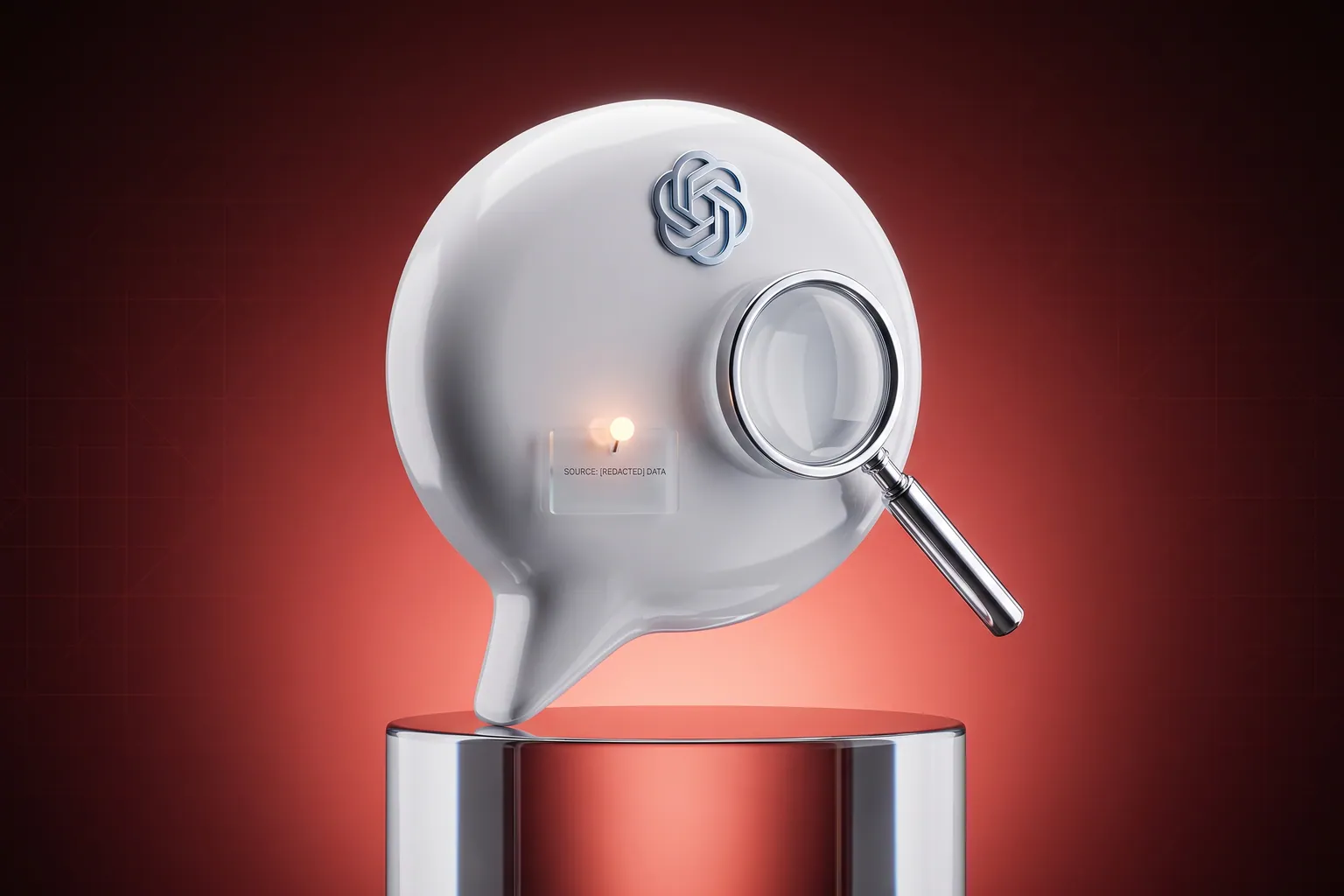
On October 31, 2024, OpenAI announced ChatGPT Search: real-time web search built directly into ChatGPT, with answers that surface source citations alongside the response. For the first time, a mainstream AI assistant with a large, engaged user base was pulling live web content and crediting specific pages for specific claims.
That changes the optimization problem. Traditional SEO is about ranking. Answer Engine Optimization - earning a citation in an AI-generated answer - is about being the clearest, most authoritative, most structurally legible source on a topic. The two disciplines overlap, but they are not the same.
What Makes ChatGPT Search Different From a Search Engine
A conventional search engine returns a list of links. The user decides which to click. ChatGPT Search synthesizes an answer from multiple sources and presents it as a direct response, with inline or footnote citations. The user may never visit your page - they read your information, attributed to you, inside the chat interface.
This has two practical implications:
- Zero-click exposure with attribution: A citation in a ChatGPT answer is brand visibility even when no click occurs. Your name, your claim, your framing - presented to the user at the moment of query.
- The citation is the ranking: There is no page two. If ChatGPT cites three sources to answer a question about, say, server-side tracking, those three pages are the entire visible result set. Getting cited is binary in a way that ranking position is not.
What Answer Engine Optimization Actually Means
AEO is not a new content format. It is a discipline of making your existing expertise legible to AI retrieval and synthesis systems. Three principles drive most of the practical work:
1. Clarity and Direct Answerability
AI systems retrieving content for synthesis favor pages that directly state answers rather than pages that bury them in narrative. If someone asks 'what is Performance Max,' a page that opens with a crisp, definitional sentence is more likely to be cited than one that opens with a scene-setting paragraph about the evolution of Google Ads.
Audit your most important pages for directness. Does each section open with the point, or does it work up to it? Can a reader - or an AI - extract a clean, citable claim from the first sentence of each subhead? Restructuring content for directness benefits both AI citation and human readability.
2. Structure That Signals Topic Coverage
Heading hierarchy, lists, and concise paragraphs do two things: they help readers navigate, and they help AI models parse the logical structure of your content. A page with clear H2s for each subtopic, short paragraphs that make one point each, and bulleted lists for parallel items is structurally transparent. An AI synthesizing an answer about your topic can quickly locate the relevant section.
This is also why FAQ sections have outsized value in AI retrieval contexts. A question-and-answer format is already shaped like the thing an answer engine is trying to produce. Pages that answer the exact questions users ask - in the heading - are easy to cite.
3. Demonstrated Authority on a Specific Topic
AI systems do not cite random pages with a matching keyword. They favor pages that demonstrate depth and authority on the specific topic. This means:
- Going beyond surface-level coverage - addressing nuance, common mistakes, and adjacent considerations
- Being internally consistent and factually precise - AI models are sensitive to hedged or contradictory claims
- Having topical coherence across your site - a single strong page on a topic is harder to validate than a cluster of related, cross-linked content that signals sustained expertise
Technical Foundations That Support Citation
A few technical factors influence whether your content is retrievable and citable by AI search systems:
- Crawlability: If your key pages are blocked from crawlers or load content entirely via JavaScript in ways that prevent indexing, AI systems cannot retrieve them. Confirm your robots.txt and rendering posture for important content pages.
- Schema markup: Article, FAQ, and HowTo structured data give AI systems additional signals about the type and structure of your content. These are not guarantees of citation, but they reduce ambiguity.
- Page authority and backlink profile: AI retrieval systems weight credibility signals from the broader web. Authoritative inbound links to specific pages remain a meaningful signal that a source is worth citing.
- Fresh, accurate content: ChatGPT Search uses real-time web data. Pages with outdated information or broken facts are less likely to be cited, and more likely to be overridden by a fresher source.
Where to Start
Pick the five questions your prospective clients ask most often. Check whether your site answers each one directly, completely, and legibly. For most B2B service sites, the gap is not that the content does not exist - it is that the answer is buried two paragraphs in or scattered across multiple pages. Consolidate and sharpen those pages first.
Then look at your topic clusters. Does your site have genuine depth on the topics you want to be cited for, or just a landing page and a blog post? Depth signals authority to AI retrieval systems the same way it signals expertise to a human researcher.
Answer engine optimization is increasingly central to how brands get found as AI-mediated search grows. Our AI Search Optimization and GEO practice covers both the content and technical dimensions of earning visibility in AI answers. If you want to understand where your site stands today, book a call and we will walk through it with you.

Article imagery is illustrative. Product names, logos, and brands that may appear in images or text are the property of their respective owners and are used for identification and commentary only; their appearance does not imply any affiliation with, or endorsement by, those owners.